
December 10 @ 1:00 pm - 2:00 pm EST
Event Navigation
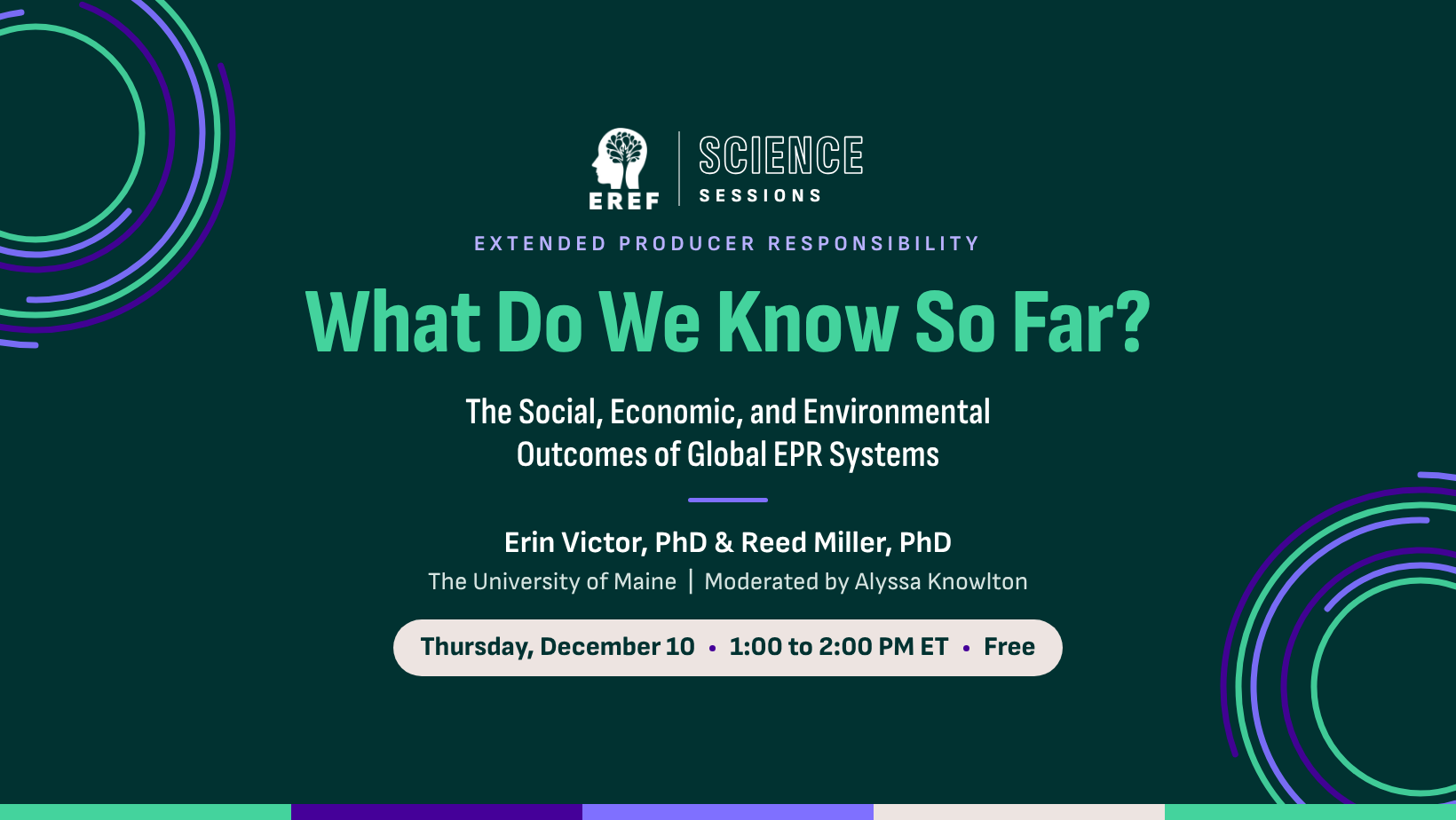
Extended Producer Responsibility (EPR) for packaging is gaining momentum across the United States, but the idea is not new. The first EPR programs emerged in the early 1990s, which means there are more than 35 years of real-world results to learn from. So what does the evidence actually show?
In this EREF Science Session, Erin Victor, PhD, and Reed Miller, PhD, of the University of Maine will share findings from a systematic literature review of packaging EPR outcomes around the world. Their interdisciplinary team screened more than 1,000 academic papers and reports to understand what is known about the environmental performance, economic consequences, and social impacts of these policies, and how researchers attribute those outcomes to EPR. Alyssa Knowlton will moderate.
Some research suggests that packaging EPR programs have strengthened the financial and operational capacity of waste management, raised collection and recycling rates, and reduced packaging waste per capita. At the same time, packaging waste continues to grow globally, and it remains uncertain whether these policies can drive packaging redesign and more circular packaging systems.
You’ll learn:
- How different EPR policy design choices shape outcomes
- What incentivizes packaging design change
- Where the notable gaps remain in research on EPR outcomes
The review is part of a two-year, EREF-funded project at the University of Maine that models the environmental, economic, and social trade-offs of different EPR policy designs in the United States.
This session is designed for solid waste and recycling professionals, policymakers and regulators, packaging producers, researchers, and others following EPR policy.

