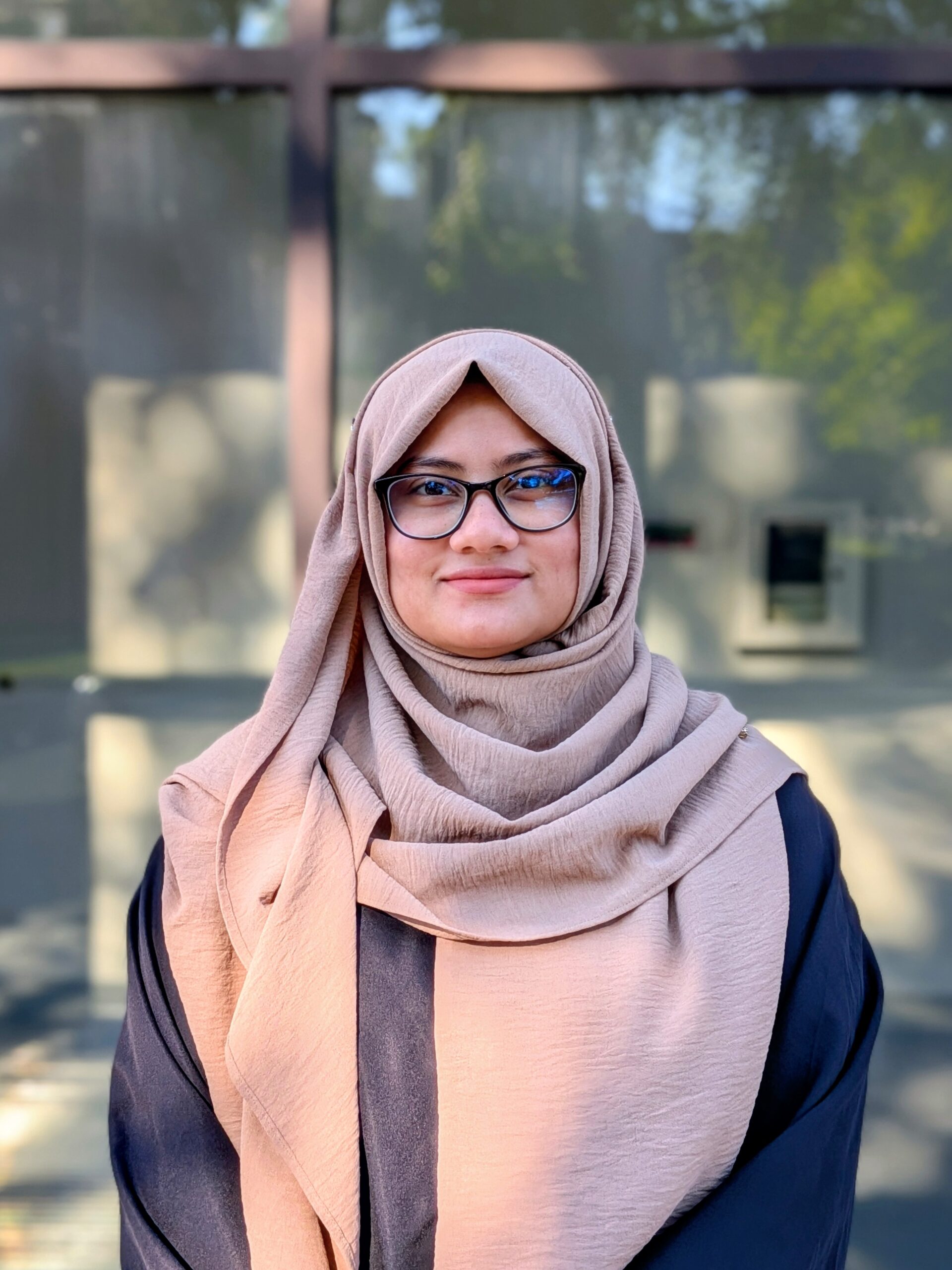
MAISHA BINTE SULTAN
North Dakota State University, PhD in Civil Engineering
EREF Scholar 2026
Project Title
Atmospheric Emissions of PFAS from Organic Waste Compost
Project Description
Composting is an important and sustainable way to manage organic waste such as food scraps, yard waste, and other biodegradable materials. However, some unwanted pollutants can enter compost along with the waste materials. One important group of pollutants is per- and polyfluoroalkyl substances (PFAS), often called “forever chemicals” because they are extremely difficult to break down and can remain in the environment for a very long time. PFAS are widely used in everyday products because they resist water, oil, heat, and stains, and they can enter waste streams through items such as food packaging, textiles, and other consumer products. Microplastics and nanoplastics, which are extremely small plastic particles, can also enter compost when plastic-containing materials are mixed with organic waste or when larger plastics break down over time. Binte Sultan’s research investigates what happens to these pollutants during the composting process. Compost piles are frequentlyturned, mixed, and screened, which can release dust and very small particles into the air. She is studying whether PFAS can become airborne directly or attach to particles released from compost, and whether micro-nanoplastics can act as carriers that transport PFAS through the air. She will examine composting facilities in Fargo, North Dakota, under different conditions, including different seasons, temperatures, moisture levels, wind conditions, and stages of composting. The goal is to understand how and when these pollutants are released and how far they may travel. Besides, characterize the mechanisms of atmospheric release of size-fractionated micro-nanoplastics during compost operation and assess their role in the fate and transport of PFAS relative to organic particulates. This research will help improve our understanding of potential exposure for compost facility workers and nearby communities and provide information that can support safer, more effective, and more sustainable organic waste management practices.
Biography
Maisha Binte Sultan is currently pursuing her PhD in Civil Engineering at Civil, Construction and Environmental Engineering Department, North Dakota State University (NDSU), and is expected to graduate in December, 2030. Under the mentorship of Dr. Syeed Md Iskander, a 2016 EREF scholar, her research focuses on understanding the fate and transport of airborne per- and polyfluoroalkyl substances (PFAS) from organic composting facilities and investigating the role of micro-nanoplastics in compost as potential carriers of airborne PFAS. Maisha earned both her Bachelor of Science (BSc) and Master of Science (MSc) degrees in Environmental Science from Bangladesh University of Professionals (BUP), completing her undergraduate degree in 2020 and master’s degree in 2022. Before beginning her PhD, she served as a Lecturer in the Department of Environmental Science at BUP, where she was involved in teaching and environmental research. Her broader research interests include the fate and transport of PFAS and micro-nanoplasticsin solid waste and composting systems, as well as human exposure to micro-nanoplastics.

