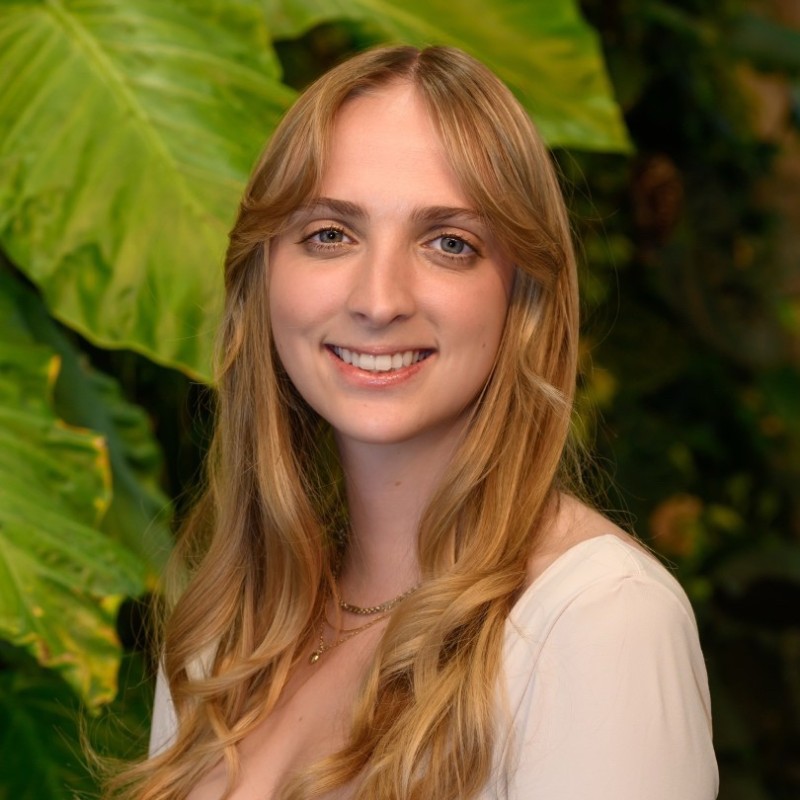
REBECCA MARTINO
Memorial University of Newfoundland, PhD in Civil Engineering
Carl J. Apicella Scholar 2026
Project Title
Development and Validation of a Satellite Minimum Detection Limit Model for Diffuse Methane Emissions
Project Description
Methane is one of the most powerful greenhouse gases in the atmosphere, trapping roughly 80 times more heat than carbon dioxide over a 20-year period. Much of it escapes into the air through leaks in oil and gas infrastructure, organic decay in landfills, and agriculture. These leaks are invisible to the naked eye, but a growing fleet of satellites and aircraft-mounted sensors can now detect them from above, giving regulators, companies, and researchers an important tool for finding and fixing emissions before they add up. My research focuses on how well this detection technology actually works. Not every methane-sensing satellite can catch every leak; smaller leaks, high winds, cloud cover, and differences in each instrument’s resolution and sensitivity all affect what gets seen and what gets missed. My work builds a physics-based simulation that models how methane plumes disperse in the atmosphere and predicts the minimum leak size each sensor can reliably detect under real-world conditions. I validate these predictions against controlled-release field experiments, in which researchers release known, precisely measured amounts of methane and record what each sensor actually catches. The result is a rigorous, evidence-based reference for how much we can trust satellite/aircraft/drone methane monitoring, which is critical information for climate policy, emissions accountability, and identifying where gaps remain in our ability to track one of the fastest, most cost-effective levers we have for slowing near-term climate change.
Biography
Rebecca Martino has a BSc in Mathematics and an MSc in Earth and Environmental Science from St. Francis Xavier University. She joined the FluxLab under Dave Risk in 2022 for her master’s. Her research focused on greenhouse gas (GHG) emissions from landfills across Canada and contributed to optimizing Environment and Climate Change Canada’s first-order decay Waste Model. She’s now pursuing a PhD in Civil Engineering from Memorial University of Newfoundland. Her research is aimed at the development of open standard methods for aircraft hyperspectral, drone column sensor, and satellite monitoring of methane emissions using controlled release facilities developed by FluxLab. Specifically, she focuses on developing a modelling framework to predict minimum detection limits for remote sensing platforms under varied environmental and sensor-specific conditions. During her time in the FluxLab, she has been a staple in leading landfill field measurement campaigns across Canada and helping professors teach environmental courses. Rebecca has had several opportunities to work with collaborative teams and stakeholders at many levels (government, provincial, waste operators, university researchers) to further the research of GHGs in the waste sector, contributing directly to government regulation and policy. She is passionate about her research and mitigating methane emissions globally.

