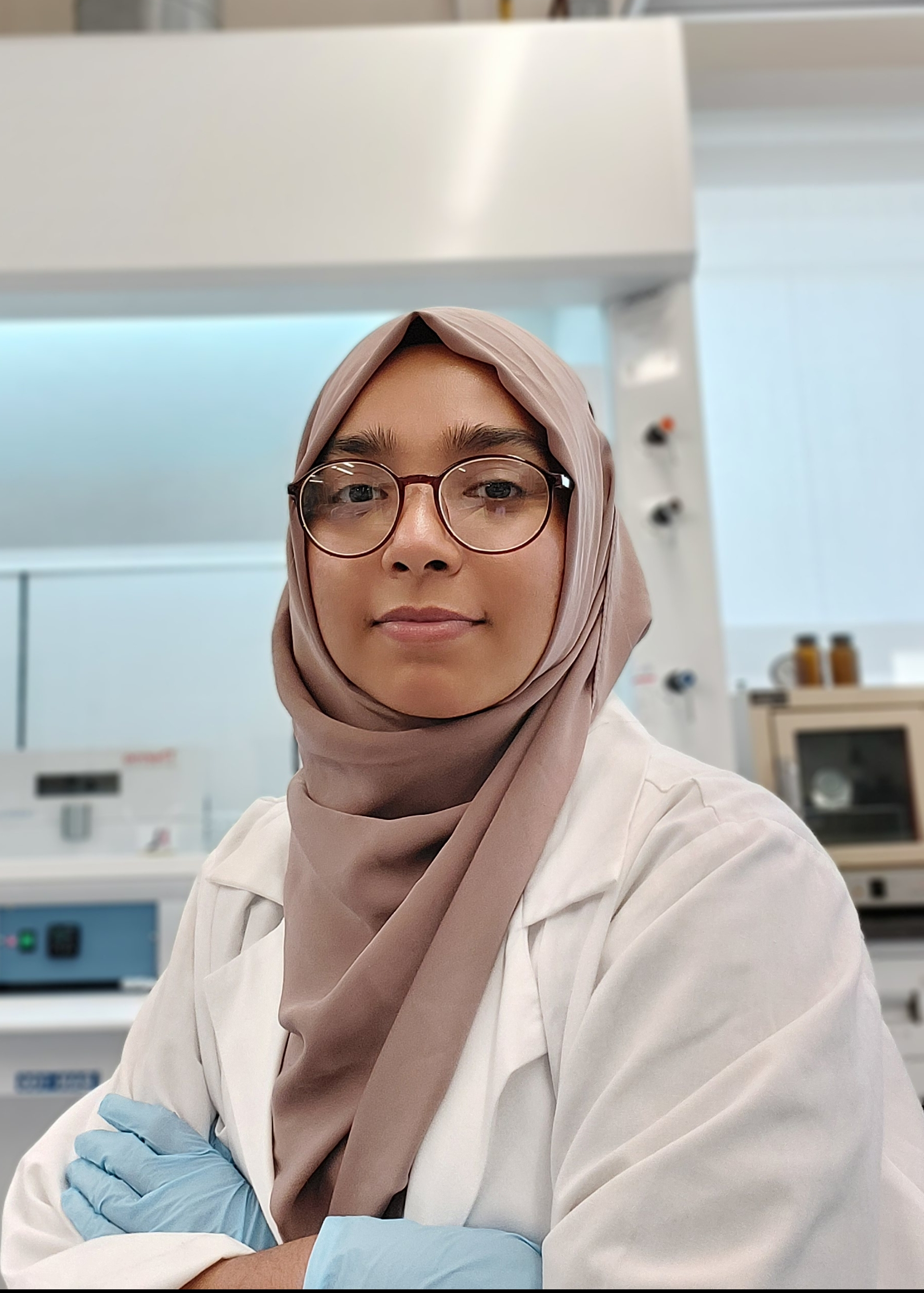
TAHSIN TABASSUM
University of New Haven, MS in Environmental Engineering
EREF Scholar 2026
Project Title
Thermocatalytic Degradation of PFAS using Metal Oxide Catalysts: Toward Lower-Temperature Destruction Pathways
Project Description
PFAS are human-made chemicals found in nonstick pans, waterproof jackets, food packaging, and firefighting foam. They resist heat, water, and grease, but that same toughness means they barely break down in nature, earning them the name “forever chemicals.” They’ve been linked to cancers and other health problems. When these products are thrown away, PFAS collect in landfills, wastewater sludge, and water filters, and can leak back into soil and water. Today, the main way to destroy them is incineration at temperatures often above 1,000°C, which is energy-intensive, expensive, and can release harmful byproducts if the burn is incomplete. Tabassum’s project tests a gentler, cheaper approach using two common, naturally occurring minerals, birnessite and magnetite, as catalysts, or “helper” materials that make chemical reactions happen more easily. When mixed with PFAS-contaminated waste and heated, these minerals may break PFAS apart at much lower temperatures. If this works, waste facilities and communities would have a safer, more affordable way to destroy PFAS instead of storing them in landfills where they can escape again.
Biography
Tahsin Tabassum is pursuing a Master of Science in Environmental Engineering at the University of New Haven. Her thesis investigates the low-temperature thermocatalytic destruction of PFAS in solid waste using birnessite and magnetite. Tahsin earned her Bachelor of Science in Environmental Science from Bangladesh University of Professionals, which she attended from 2018 to 2021. Her undergraduate thesis examined microplastic transport, heavy-metal interactions, and removal efficiency in constructed wetland wastewater systems. She continued this work as a Research Associate at Independent University Bangladesh, where she published on wastewater treatment and emerging contaminants. Later, as a Senior Research Officer at the Institute of Strategy & Tactics Research, she developed climate vulnerability and risk assessments for infrastructure and natural systems in Bangladesh. Tahsin now works as a Graduate Research Assistant at the University of New Haven.

